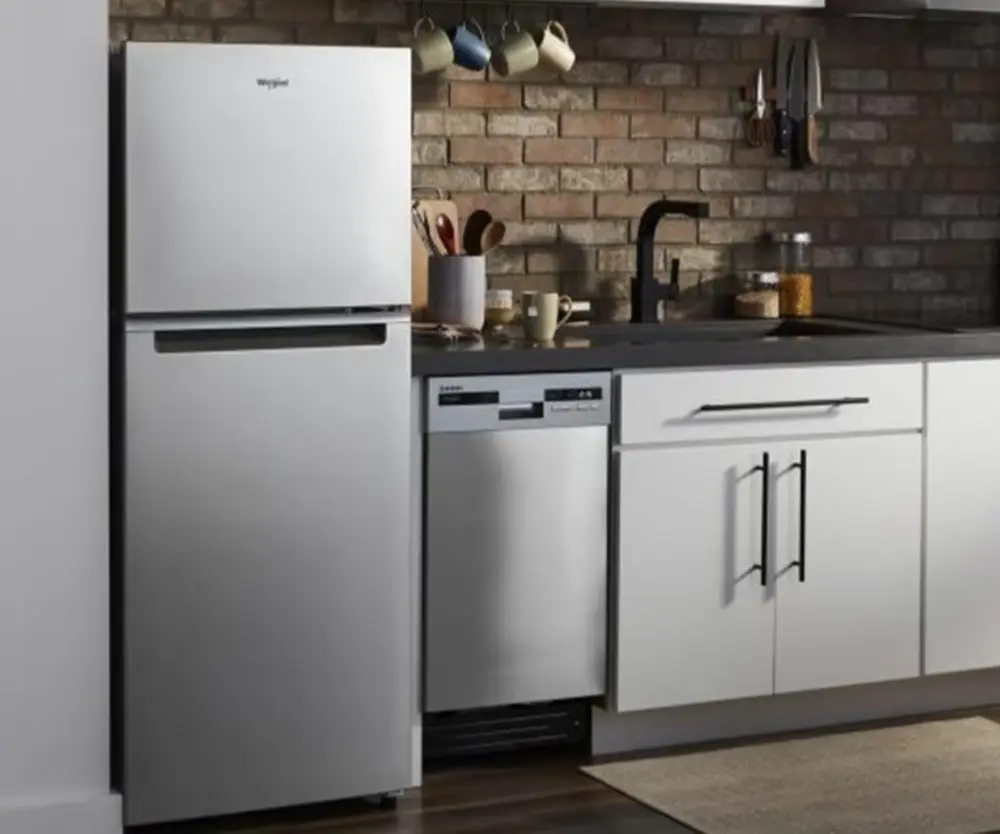
Refrigerator Repair Spokane — Licensed, Local, Same-Day
Trusted fridge repairs in Spokane — we diagnose the real problem and fix it right the first time, not just patch it until it fails again.
Licensed & Insured
Same-Day Service
Genuine OEM Parts
EPA 608 Certified
Workmanship Warranty
How much does refrigerator repair cost in Spokane?
Most repairs run $100 to $450, with compressor replacement at the higher end around $300–$600. We quote a firm price before starting any work.
How long do refrigerators usually last?
The U.S. Department of Energy estimates an average lifespan of around 12 years, though well-maintained units with simpler designs can last considerably longer.
Can I get same-day refrigerator repair in Spokane?
Yes, in most cases. Refrigerators that have stopped cooling entirely are treated as same-day priority, since food safety becomes a concern within hours.
Your fridge doesn’t check the calendar before it quits. Evergreen Appliance Repair handles Spokane refrigerator repair out of 4920 N Market St, Spokane, WA 99217 — ready to diagnose the real problem and fix it the same day in most cases.
Why a Broken Fridge in Spokane Can’t Wait
In a Spokane July, refrigerator repair Spokane calls spike — and you don’t have days to deal with a warm refrigerator. You have about four hours before dairy, meat, and anything in the crisper starts to turn — less if the kitchen itself is sitting at 85 degrees because the AC is fighting the same heat wave your fridge is. In January, it’s a different emergency: a garage freezer full of holiday food that suddenly isn’t freezing, with roads too icy to make three trips to the store to replace it. Both situations are common here, and both are why we prioritize same-day diagnosis whenever a call comes in describing a fridge that’s stopped cooling, not just slowed down. That’s the climate context behind every local appliance techs deal with year-round — summer heat loads and winter garage failures are the two most predictable call patterns we see.
Why refrigerator repair calls spike in Spokane
Refrigerators here work harder than almost anywhere else in the Pacific Northwest, and it’s almost entirely about the swing. Spokane summers regularly push past 95°F, with the city’s all-time record sitting near 108°F, and winters routinely drop into the low 20s with hard freezes well below that. A compressor built to manage a fairly narrow band of ambient temperature has to run far longer and harder when the kitchen itself is 90°F, and that extra strain is what pushes a borderline unit into full failure.
Then there’s wildfire season. Every August and September, fine particulate from Eastern Washington wildfires drifts through the region and settles into anything with an open-air intake — including the condenser coils on the back or bottom of your refrigerator. We see a real uptick in “running constantly” calls every October that trace back to coils nobody thought to check after fire season.
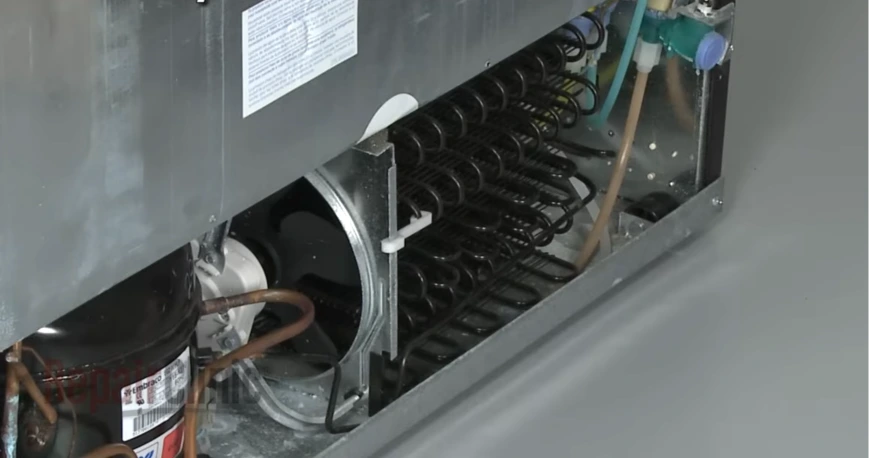
Winter brings its own version of the same problem in reverse. A lot of Spokane homes keep a second refrigerator or standalone freezer in the garage, and when outdoor temperatures drop low enough, the thermostat reads the ambient air as already cold and can stop the compressor from running at all — which sounds like the unit failed, but is actually doing exactly what a poorly placed thermostat tells it to do. We see this pattern often enough that garage-freezer call makes up a steady share of our winter refrigerator repairs Spokane wide.
Spokane’s refrigerator repair seasonal calendar
Refrigerators don’t fail at random in the calendar matters. Here’s what we see, season by season.
June–September (Summer Heat)
Kitchens routinely hit 85–90°F during a heat wave, forcing the compressor to run far longer than it was designed for. This is when borderline compressors finally fail, and when condenser coils need to dissipate the most heat with the least help from the surrounding air.
August–October (Wildfire Season)
Fine particulate from Eastern Washington wildfires settles into condenser coils faster than ordinary household dust. We see a real spike in “running constantly” calls every October that trace straight back to coils nobody thought to check after fire season.
November–February (Winter Freeze)
Garage refrigerators and standalone freezers are common in Spokane, and when the garage drops well below freezing, the thermostat reads the ambient air as already cold and can stop the compressor entirely — which looks like a failure but is the unit doing exactly what it was told.
March–May (Spring Thaw)
Humidity swings as snow melts can affect door gasket seals, and Spokane’s hard water continues narrowing defrost drain lines year-round. Spring is also when a unit that limped through winter on a failing part finally gives out.
Symptoms We Diagnose Every Day — Spokane Refrigerator Repair
Refrigerator not cooling
The cause list runs from simple (a door left slightly open, a dirty coil) to expensive (a failed compressor) — the only way to know which is to test it, not guess.
Refrigerator freezing food
Usually a damper or temperature sensor sending bad readings to the control board — not something you bumped on a dial.
Water leaking inside or under the fridge
Almost always a clogged defrost drain line, sometimes a cracked water line from Spokane’s mineral-heavy water.
Ice maker not working
Water inlet valves and frozen fill tubes make ice makers the single most repair-prone component on a modern fridge.
Running constantly
In Spokane, the leading causes are dirty condenser coils (wildfire season), a worn door gasket, or low refrigerant.
Loud or grinding noises
Often a fan hitting built-up ice, sometimes a failing start relay, occasionally a compressor on its way out.
Freezer frosting over
Points to the defrost system — the timer, heating element, or thermostat that’s supposed to melt that ice on a schedule.
Water dispenser not working
Usually a frozen line, a failed inlet valve, or a clogged filter — related to the ice maker system.
Our Repair Process & Pricing
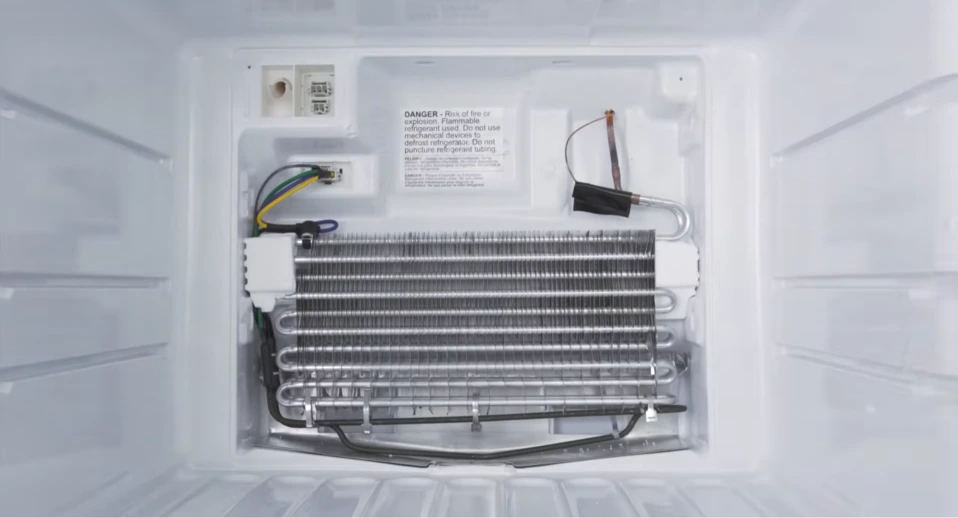
Clamp meter test. Every fridge repair in Spokane starts the same way — with a proper diagnosis, not a guess. We measure ampere draw on the compressor’s relay wire at startup. A healthy compressor pulls 1–3 amps; 15+ amps and a shutdown means a confirmed compressor failure, not a guess.
Relay checked first. A failed start relay is a much cheaper fix and gets blamed on the compressor more often than it should.
Nitrogen pressure test. Before any refrigerant recharge, we confirm whether the sealed system has a leak or moisture contamination.
Brands we repair — and what we actually know about each one — Spokane
S
Samsung
Samsung’s French-door ice makers were the subject of a class action lawsuit over ice buildup, water leaking under the crisper drawer, and grinding fan noise — serious enough that Samsung issued a technical service bulletin acknowledging the problem. Full details on our Samsung service page →
L
LG
LG’s proprietary linear compressor became the subject of a class action settlement covering roughly 1.5 million refrigerators across 31 models, with payouts between $50 and $3,500. Full details on our LG service page →
W
Whirlpool
Consistently the brands independent technicians say they’d buy for their own kitchens — universal parts and every shop can service them without a fight over authorization. Full details on our Whirlpool service page →
G
GE
GE Appliances was sold to the Chinese manufacturer Haier in 2016, and quality has been more variable since — pre-2016 units tend to be simpler and more mechanically reliable, common in Spokane’s older housing stock. Full details on our GE service page →
K
Kenmore
Kenmore was never actually a manufacturer — it was a Sears badge applied to refrigerators built by Whirlpool, Electrolux, LG, or Samsung depending on the model year.
S
Sub-Zero
Sub-Zero units are engineered to be repaired rather than replaced, and we regularly see them running well past 20 years with proper sealed-system maintenance roughly once a decade. Full details on our Sub-Zero service page →
Repair or replace? Here’s the honest math
Consumer Reports found that 49% of refrigerators purchased since 2015 have experienced at least one problem. The U.S. Department of Energy puts average refrigerator lifespan at around 12 years, a meaningful drop from the 20 to 30 years a well-built 1990s unit could deliver.
Our rule of thumb: if a repair quote comes in at half the cost of a comparable new refrigerator or less, fix it. There’s a wrinkle worth knowing — Samsung, LG, and KitchenAid advertise long compressor warranties, but those cover the part only, not labor. Labor on a compressor swap runs $800 to $1,400 even with an active warranty.
What refrigerator repair costs in Spokane
We quote a price before any work begins, not after. Typical ranges we see across the area:
| Compressor replacement | $300–$600 |
| Door gasket or seal replacement | $80–$150 |
| Thermostat or temperature sensor | $100–$180 |
| Defrost system (timer, heater, or thermostat) | $150–$300 |
| Ice maker assembly or water inlet valve | $120–$280 |
| Control board replacement | $200–$450 |
If a repair is going to land near the cost of a comparable new unit, we’ll tell you that upfront instead of after we’ve opened the panel.
Spokane neighborhoods we cover
From the bluff above South Hill to the warehouses near Evergreen and Trent, we’ve worked on refrigerators across nearly every part of this city. North Spokane homes around Five Mile Prairie and Indian Trail, the suburban growth in Spokane Valley and Liberty Lake, the college and ranch communities around Cheney and Airway Heights, and the smaller towns of Medical Lake and Mead — each area has its own pattern. No matter which side of town you’re on, our Spokane refrigerator repairs come with the same firm pricing and same-day availability.
Recent Jobs
A sample of recent repair calls across the Spokane area.
South Hill — Samsung French-Door, July 2026
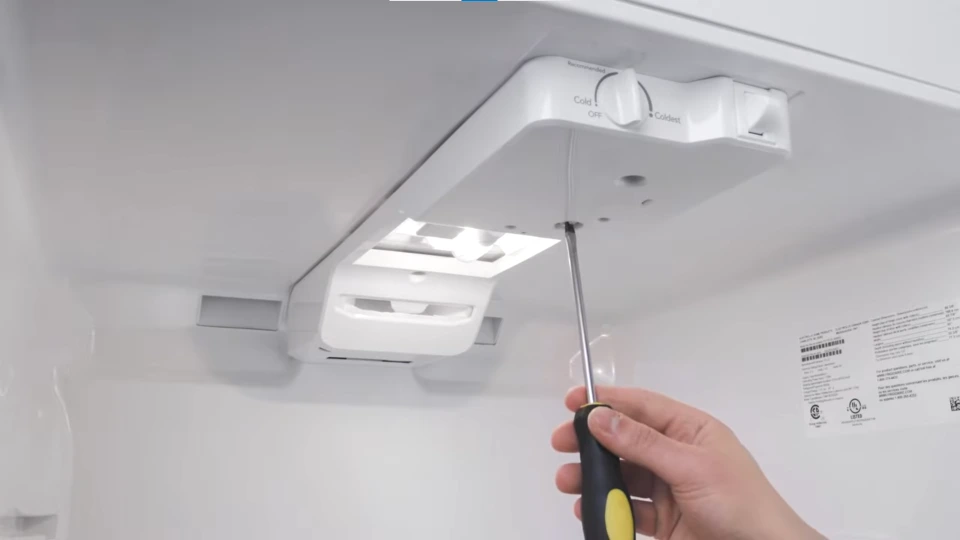
A homeowner called after her ice maker started leaking water under the crisper drawer and the fan began grinding loudly during the hottest week of the summer. A clamp meter test showed the compressor was drawing normal amperage, ruling out the most expensive possible cause. The actual problem was the ice maker assembly itself, replaced with an OEM part the same afternoon — well within the four-hour food-safety window that matters most in summer heat. Outcome: Ice maker replaced, same day. July 2026.
Liberty Lake — LG No-Cool, September 2025
No warning, no gradual warming — just a fridge that was fine at bedtime and dead by morning, the classic total no-cooling event LG’s own settlement documentation describes. The condenser coils were caked with a fine gray residue consistent with wildfire smoke. Combined with a compressor already near the end of its service life, the clogged coils were the final push. Outcome: Coils cleaned, compressor replaced under warranty referral. September 2025.
refrigerator repair Spokane Valley — Garage Kenmore Freezer, January 2026
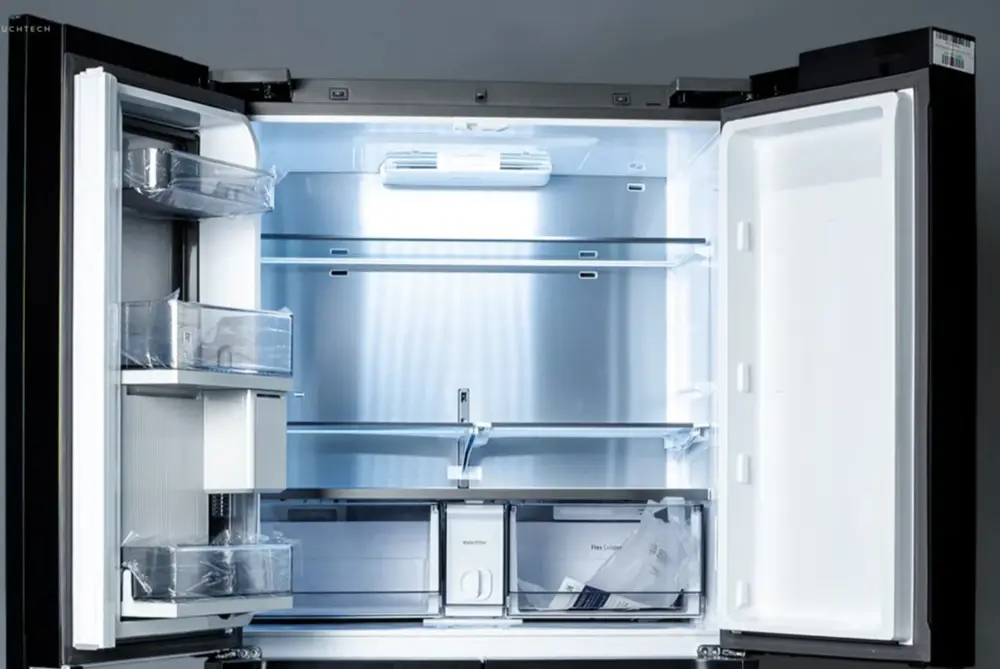
The homeowner assumed the compressor had failed after a hard freeze. The freezer was actually doing exactly what its thermostat told it to do — once the garage dropped well below freezing, it interpreted the space as already cold enough and stopped the compressor entirely. We relocated the thermostat sensor and added a garage-rated kit. Outcome: Thermostat sensor relocated, garage kit installed. January 2026.
North Spokane (Five Mile Prairie)
A household with an insulin-dependent family member called when their refrigerator’s cooling became inconsistent on a Friday evening. We treated this as a same-day priority — in this case, a worn door gasket letting in enough warm air to create temperature swings. The gasket was replaced within the hour. Outcome: Door gasket replaced within the hour. April 2026.
What Spokane homeowners say
What our customers say about their experience:
⭐⭐⭐⭐⭐
“Fridge stopped cooling overnight during the July heat wave. Technician arrived the same morning, ran a clamp meter test on the compressor, confirmed it was a failed start relay — not the compressor. Saved us from an unnecessary $400 repair. Everything was cold again by noon.”
— Sarah M., Liberty Lake · July 2026
⭐⭐⭐⭐⭐
“Our garage freezer stopped running in January and I assumed it was dead. Turned out the thermostat was reading the cold garage air and cutting the compressor off — a fifteen-minute fix once they explained what was happening. Honest and fast.”
— Dave K., Spokane Valley · January 2026
⭐⭐⭐⭐⭐
“Samsung French-door ice maker started leaking under the crisper and the fan was grinding. They diagnosed it the same afternoon — ice maker assembly, replaced with an OEM part. No upsell on the compressor. Exactly the kind of honest diagnosis you hope for.”
— Rachel T., South Hill · July 2026
⭐⭐⭐⭐⭐
“Called on a Friday evening because our fridge was running constantly and the food was barely cold. Condenser coils were completely caked — wildfire smoke from September. Cleaned and back to normal within the hour. I had no idea that was even a thing.”
— Mike B., Five Mile Prairie · October 2025
⭐⭐⭐⭐⭐
“LG refrigerator stopped cooling with no warning. Technician knew exactly what to check — coils were coated in fine gray residue from fire season, compressor was already borderline. Gave us a straight answer on repair vs. replace rather than pushing the expensive fix.”
— Jennifer L., North Spokane · September 2025
⭐⭐⭐⭐⭐
“Fridge was freezing everything in the main compartment. Damper and temperature sensor were sending wrong readings to the control board — not anything I’d bumped on the dial like I thought. Fixed same day. Price was exactly what they quoted before starting.”
— Chris W., Cheney · March 2026
⭐⭐⭐⭐⭐
“Insulin storage situation — our fridge started swinging temperatures on a Friday night. They treated it as same-day priority, found a worn door gasket letting in warm air, replaced it within the hour. That kind of urgency matters when medication is involved.”
— Linda H., Indian Trail · April 2026
⭐⭐⭐⭐⭐
“Water pooling under the crisper drawer. Clogged defrost drain line — common in Spokane apparently because of the hard water. Cleared and treated in about 45 minutes. Quoted the price before touching anything and stuck to it.”
— Tom R., Airway Heights · May 2026
How we compare to a typical Spokane repair listing
We reviewed the sites of several refrigerator repair companies serving Spokane before building ours. Here’s what we found most of them were missing.
| Evergreen Appliance Repair | Typical Spokane Listing | |
|---|---|---|
| Spokane climate-specific content (wildfire coil clogging, garage winter failures) | ✓ Yes | ✗ Not published |
| Upfront published price ranges, not “call for quote” | ✓ Yes | ✗ Not published |
| Same-day diagnosis explicitly committed | ✓ Yes | ✗ Rarely stated |
| Genuine OEM parts stated as policy | ✓ Yes | ✗ Not published |
| Structured FAQ answers built for AI search & voice assistants | ✓ Yes | ✗ Not published |
| Neighborhood-level service area detail (not just “Spokane area”) | ✓ Yes | ✗ Not published |
Based on a review of publicly available Spokane-area refrigerator repair websites as of mid-2026. Individual companies may have since updated their sites.
Why Spokane homeowners trust us
Our lead technician has worked on refrigerators from Five Mile Prairie to Liberty Lake and puts the job simply: most of what looks like a dead refrigerator in Spokane is actually one of four or five predictable failures tied directly to this region’s climate — you just have to know which one you’re looking at before you start replacing parts.
How much does refrigerator repair cost in Spokane? → Full FAQ
Most repairs in Spokane run $100 to $450 depending on the component, with compressor replacement at the higher end around $300–$600. We provide a firm quote before starting any work, and if a repair approaches the cost of a new unit, we’ll say so directly. These are the actual numbers from Spokane refrigerators repair calls — not padded estimates from a call center that’s never touched your machine.
Is it worth fixing a refrigerator that’s 7 years old?
In almost every case, yes. Most major components still have years of useful life left at 7 years old, and a typical repair costs a few hundred dollars against $1,000 or more for a new comparable unit. The exception is a major sealed-system failure on a unit that’s already shown other problems.
What is the most common refrigerator repair?
Ice maker and water dispenser failures are the single most frequent repair call across every brand, followed by door gasket or seal replacement and condenser or evaporator fan issues causing uneven cooling.
Why does my refrigerator keep freezing food in the main compartment?
This is almost always a damper or temperature sensor sending an incorrect reading to the control board, not a setting you accidentally changed. It’s especially common on models that use one thermostat to manage both the fridge and freezer compartments.
Why does my refrigerator run constantly without cycling off?
The leading causes, in order of frequency, are dirty condenser coils, a worn door gasket letting cold air escape, and low refrigerant from a slow leak. In Spokane, wildfire smoke residue on the coils is a common trigger every fall.
Is it cheaper to repair or replace a refrigerator?
Repair is cheaper in the large majority of cases — average repairs cost $100 to $450 against $1,000 to $4,000-plus for a new unit. The standard guideline is to repair if the quote comes in under half the cost of a comparable new refrigerator, and consider replacement above that line.
How long do refrigerators usually last?
The U.S. Department of Energy estimates an average lifespan of around 12 years, though well-maintained units and simpler mechanical designs can last considerably longer. A refrigerator from the 1990s often ran 20 to 30 years; modern units with more electronic components tend to fail sooner.
What is the 50% rule for appliance repair?
The 50% rule states that if a repair costs more than half the price of a comparable new appliance, replacement is usually the better financial decision. It’s a quick, honest gut-check technicians use to avoid recommending unnecessary repairs on appliances near the end of their useful life.
Do you offer same-day refrigerator repair in Spokane?
Yes, same-day service is available in most cases, particularly for refrigerators that have stopped cooling entirely, since food safety becomes a concern within hours rather than days.
📅 Service Hours
| Monday – Friday | 8:00 AM – 6:00 PM |
| Saturday | 9:00 AM – 4:00 PM |
| Sunday | Closed |
Emergency calls for insulin/medication storage failures are prioritized outside normal hours.
Which refrigerator brands do repair technicians recommend?
Independent repair technicians most often recommend Whirlpool or Maytag for standard use, citing universal parts availability and ease of service. Bosch is frequently named the most reliable French-door option, and Sub-Zero is considered the most repairable long-term investment for buyers who want a 20-plus year appliance.
How often should I clean my refrigerator’s condenser coils in Spokane?
Twice a year is the standard national recommendation. In Spokane specifically, we recommend a third cleaning in early October, after wildfire smoke season, since fine particulate from regional fires clogs coils faster than ordinary household dust.
Refrigerator Broke & You Store Insulin? Do This
Treat it as an urgent repair call rather than waiting to see if the problem resolves itself, since insulin and many medications require a fairly narrow temperature range. While waiting for a technician, move medication to a cooler with ice packs rather than leaving it in a refrigerator with inconsistent temperatures. If medication is at risk, tell us when you call — that context moves the job to same-day priority. It’s the kind of fridge repair Spokane households with medical storage needs shouldn’t have to explain twice.
Hours
Mon–Fri 8am–6pm · Sat 9am–4pm
Location
4920 N Market St, Spokane WA 99217
Credentials
Licensed & Insured · EPA 608 Certified · OEM Parts
Schedule Your Repair Today
Evergreen Appliance Repair
4920 N Market St, Spokane, WA 99217
(509) 348-5757
Serving Spokane, Spokane Valley, South Hill, North Spokane, Five Mile Prairie, Indian Trail, Liberty Lake, Cheney, Airway Heights, Medical Lake, and Mead.
Frequently Asked Questions
Do you come the same day?
Most calls placed before noon get same-day service across Spokane, Spokane Valley, Liberty Lake, Cheney, Airway Heights, and Mead. Evening calls are typically scheduled for first thing the next morning. We don’t leave you waiting days for a diagnosis.
Will the technician have the part, or will I need to wait?
We carry OEM parts for the most common failures on Samsung, LG, Whirlpool, GE, and Maytag on every truck. Most repairs are completed in a single visit. When we need to order a specific part, we source locally and return within 24–48 hours in most cases — not a week later.
Do you protect my floors and clean up after the repair?
Yes. We use shoe covers on every visit, protect floors and cabinets around the work area, and clean up completely before leaving. Your home is left the way we found it.
Do you handle LG refrigerator warranty claims?
Yes. LG extended the sealed system warranty to 10 years on many French-door refrigerators manufactured between 2016 and 2021 due to a documented linear compressor failure pattern. If your LG fridge stopped cooling and it’s in that production window, your repair may be fully covered. We help you verify eligibility and process the claim so you’re not paying out of pocket for a covered failure.
What if a previous repair company gave me the wrong diagnosis?
It happens more often than it should. We diagnose with actual tools — multimeter, temperature probes, refrigerant gauges — not guesswork. We identify the specific failed component and part number before quoting anything. If you’ve already paid another company and the problem wasn’t fixed, call us for a second opinion. We’ve resolved a lot of misdiagnosed repairs in Spokane.
Can you repair old refrigerators — 15, 20 years old?
Yes. We regularly repair refrigerators 15–25 years old. Age alone isn’t a reason to replace something. A 20-year-old top-freezer Whirlpool with a failed defrost heater is a $140 repair, not a replacement. If it makes financial sense to fix it, we’ll tell you. If it doesn’t, we’ll tell you that too.
All Refrigeration Services in Spokane
Beyond standard fridge repair, we cover the full range of refrigeration needs in the Spokane area:
Built-in refrigerator repair — Sub-Zero, Thermador, KitchenAid, Bosch, and Miele. Panel-ready and flush-mount units in Spokane homes.
Freezer repair Spokane — Upright freezers, chest freezers, and combination units. Same-day service when you call before noon.
Commercial refrigerator repair — Walk-in coolers, reach-in refrigerators, display cases, and commercial ice machines across Spokane.
Samsung refrigerator repair — Ice maker failures, no-cool issues, fan noise. OEM parts, same-day diagnosis.
Common Refrigerator Repairs We Handle in Spokane
Every service page below starts with a diagnosis — we identify the exact failed component before quoting anything. No surprises on the invoice.
Refrigerator not cooling — Our most common call. Covers every not-cooling scenario by symptom: freezer cold/fridge warm, both warm, cycling on and off.
Ice maker not working — LG warranty claims, Samsung ice maker design issues, hard water inlet valve failures, and frozen fill tubes.
Freezer repair Spokane — Chest freezers, upright freezers, garage units, and combo freezer compartments.
Built-in refrigerator repair — Sub-Zero, Thermador, KitchenAid, Bosch, and Miele. Panel-ready and flush-mount units.
Commercial refrigerator repair — Walk-in coolers, reach-in units, display cases, and commercial freezers across Spokane.
LG refrigerator repair — Linear compressor failures, warranty claim assistance, ice maker repair. We verify LG warranty eligibility before you pay anything.