
Refrigerator Not Cooling in Spokane? Here’s Why
Why is my refrigerator not cooling? The most common causes of refrigerator not cooling in Spokane are dirty condenser coils (the same buildup that causes a refrigerator to run constantly), a failed evaporator fan, a faulty start relay, or a worn door gasket. In Spokane, wildfire smoke clogging condenser coils is the leading cause of sudden no-cooling failures from August through October.
Recent No-Cooling Repairs in Spokane
Homeowner called after the fridge stopped cooling overnight during a heat wave. Condenser coils were caked with fine gray residue from wildfire smoke. Cleaned coils, compressor confirmed healthy with clamp meter test. Fridge back to temperature within two hours. No parts needed.
Total no-cooling failure — both sections warm by morning. Clamp meter test confirmed LG linear compressor pulling 15+ amps and shutting down on startup. Compressor replaced under LG’s 10-year parts warranty; homeowner paid labor only. Unit fully operational same day.
Refrigerator section warm, freezer cold. Evaporator fan blade had stopped — fan motor bearing failed. Replaced OEM motor, confirmed damper operation, cooling restored within 45 minutes. $145 total for parts and labor.
Frequently Asked Questions
-
Why is my fridge warm but freezer still cold?
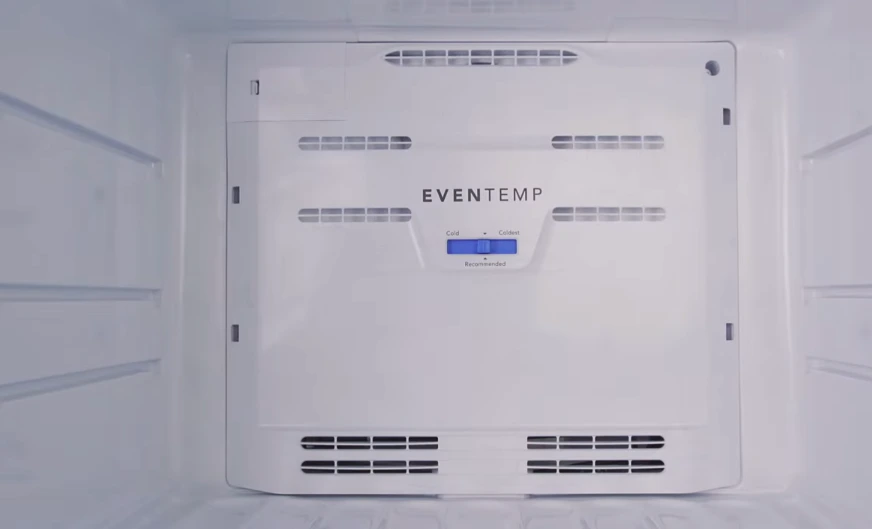
This is almost always an evaporator fan or damper failure — not a compressor problem. Cold air is produced in the freezer and distributed to the fresh food section by a fan and damper. If the freezer is cold but the fridge is warm, the cold air isn’t moving. Either the fan motor has failed, the damper is stuck closed, or the evaporator coil is frosted solid and blocking airflow. All three are significantly cheaper than a compressor replacement.
-
How much does refrigerator repair cost in Spokane?
Most fridge not cooling Spokane repairs cost $100–$450. A start relay swap runs $40–$80. Fan motor replacement is $100–$180. Defrost system repair is $150–$300. Compressor replacement is $300–$600 on most brands, or $800–$1,400 labor-only on LG and Samsung models where the part is under warranty. We provide a firm quote before starting any work.
-
Is it worth repairing a refrigerator that stopped cooling?
In most cases yes. The standard guideline is to repair if the quote is under 50% of the cost of a comparable new unit. A new refrigerator costs $1,000–$4,000 installed; most no-cooling repairs cost $100–$450. Even a compressor replacement at $400–$600 is far less than replacement on a unit that otherwise has years of life left. The exception is an LG or Samsung with a failed linear compressor out of warranty — at $1,100–$1,700, the math is closer.
-
What causes refrigerator compressor failure?
The leading causes of compressor failure are: dirty condenser coils forcing the compressor to run hotter than designed (in Spokane, wildfire smoke makes this worse every fall); low refrigerant from a slow sealed system leak that makes the compressor work harder; sustained high ambient temperatures — a garage or kitchen that stays above 90°F during a heat wave; and manufacturing defects, which account for most LG and Samsung linear compressor failures in units 5–10 years old.
-
How long does a no-cooling repair take?
Most no-cooling repairs are completed in a single visit of 45 minutes to 3 hours. A relay swap is 30–45 minutes. A fan motor or damper replacement is 45–90 minutes. A defrost system repair is 60–90 minutes. A compressor replacement is a half-day job — 3–5 hours including nitrogen pressure testing and refrigerant recharge. We stock parts for the most common repairs on the truck.
-
Can dirty condenser coils cause a refrigerator to stop cooling completely?
Yes — and it’s the most common cause of sudden no-cooling failures in Spokane from August through October. Coils clogged with wildfire smoke particulate prevent the refrigerant from shedding heat efficiently. The compressor runs hotter and harder until it hits its thermal overload protection and shuts down. The fridge stops cooling entirely even though the compressor isn’t permanently failed — cleaning the coils often restores operation immediately, with no parts needed.
When you need refrigerator not cooling repair in Spokane, fast diagnosis matters. A refrigerator not cooling in Spokane is one of the most urgent appliance calls we get — food safety starts at risk within 4 hours. If your refrigerator stopped cooling and it happened fast — not a slow warm-up over a few days, just suddenly dead — the most common causes of refrigerator not cooling in Spokane, in order of frequency, are a dirty condenser coil, a worn door gasket, a failed start relay, or a failed compressor. The only way to know which one you’re dealing with is to test it, not guess, and the difference between these can mean a $100 fix or a $500 one. We provide same-day refrigerator repair in Spokane and diagnose the real cause before we touch a single part.
Why is my refrigerator not cooling in Spokane? The most common causes are dirty condenser coils (Spokane wildfire smoke accelerates this), a failed evaporator fan, a faulty start relay, or a worn door gasket. Diagnosis takes 20–30 minutes. Most repairs: $80–$350.
Why this happens more in Spokane specifically
Spokane summers regularly push past 95°F, and a compressor built to manage a fairly narrow band of ambient temperature has to run far longer and harder when the kitchen itself is 90°F. That extra strain is exactly what pushes a borderline unit into full failure. Every August and September, fine particulate from Eastern Washington wildfire season also settles into the condenser coils on the back or bottom of the unit, clogging them faster than a typical maintenance schedule accounts for — we see a real spike in “not cooling” calls every fall that traces straight back to coils nobody thought to check.
How we actually diagnose it
Every refrigerator not cooling Spokane diagnosis starts with the same question: is the freezer working? We start with a clamp meter on the compressor’s relay wire to measure ampere draw at startup. A healthy compressor pulls 1 to 3 amps and keeps running. If it spikes to 15 amps or higher and shuts itself off, that’s a definitive compressor failure — not a guess. We check the start relay first, since a failed relay is a much cheaper fix and gets blamed on the compressor more often than it should. If the issue is in the sealed system, we run a nitrogen pressure test before recommending a recharge, since that tells us whether refrigerant has already escaped and whether moisture has gotten into the lines.
The most common causes, ranked by how often we see them
- Dirty condenser coils — the single most common cause in Spokane, especially September through November after wildfire season. A coil cleaning runs $80–$150.
- Worn door gasket — lets cold air escape continuously, forcing the compressor to run constantly without ever reaching set temperature. Replacement runs $80–$150.
- Failed start relay — a small, inexpensive part that’s often misdiagnosed as a dead compressor. Replacement runs $100–$180.
- Failed evaporator or condenser fan — without airflow, cold air never reaches the cabinet even if the compressor is fine. Runs $120–$220.
- Compressor failure — the most expensive cause, confirmed only by an amperage test, not by sound or age alone. Runs $300–$600.
- Low refrigerant from a slow leak — requires a pressure test and EPA-certified recharge. Runs $200–$450 depending on leak location.
What to do in the first hour
Keep the door closed as much as possible — every time it opens, warm air rushes in and the compressor has to work that much harder to recover. If you store insulin or other temperature-sensitive medication, move it to a cooler with ice packs right away rather than waiting to see if the fridge recovers on its own. You have roughly four hours before perishables in a warm refrigerator become a food-safety concern, less if the kitchen itself is hot.
Why is my refrigerator not cooling but the freezer still works?
This points to a damper or evaporator fan problem rather than the compressor, since the compressor clearly still runs well enough to keep the freezer cold. A blocked air duct between the freezer and fridge compartments, or a failed damper control, is usually the cause — not a sealed-system failure.
How much does it cost to fix a no-cooling fridge?
Most fixes for this specific symptom run $80 to $300. The exception is a confirmed compressor failure, which runs $300 to $600 including labor. We quote the price after testing, before any work begins, so you’re never guessing.
Can a refrigerator that stopped cooling be saved?
If you also notice water pooling inside or under the fridge, a clogged defrost drain is often contributing alongside the cooling issue. In the large majority of cases, yes — it can be repaired. The standard guideline is the 50% rule: if the repair quote comes in under half the cost of a comparable new refrigerator, fix it. A “not cooling” diagnosis is rarely the most expensive possible cause, so most of these calls end in a repair, not a replacement recommendation.
Same-day Spokane refrigerator not cooling service
If your fridge stopped cooling today, we can usually get to you the same day. Call (509) 348-5757 or see our full refrigerator repair Spokane service overview, pricing, and service area.
Common Questions
My fridge stopped cooling suddenly — is it an emergency?
Food becomes unsafe above 40°F after 4 hours. Keep the door closed as much as possible — a closed fridge holds temperature longer. Move meat, dairy, and leftovers to the freezer or a cooler immediately. Then call us. Most same-day calls before noon get a tech out the same day.
A previous repair company gave me the wrong diagnosis — how is yours different?
We diagnose with a multimeter, temperature probes, and refrigerant gauges — not guesswork. We identify the exact failed component before quoting. If another company replaced parts that didn’t fix the problem, we’ll find what actually failed.
The freezer is still cold but the fridge section is warm — what does that mean?
Good news — it means the refrigerant system is working. The problem is airflow, usually a failed evaporator fan motor or a stuck air damper. These are straightforward repairs, typically $150–$260. Much less serious than a compressor issue.
The USDA recommends keeping refrigerators at or below 40°F for food safety — see FoodSafety.gov’s 4 steps to food safety for guidance on what to do with food during a refrigerator outage.
Related Refrigerator Services in Spokane
If your refrigerator stopped cooling and you have a built-in unit (Sub-Zero, Thermador, KitchenAid), see our built-in refrigerator repair page — access and parts sourcing are different from freestanding units.
If both the fridge and freezer section are warm, or you have a standalone unit that stopped freezing, see our our standalone freezer repair service.
For Samsung no-cool issues, see our Samsung refrigerator repair page. For LG not cooling — especially if you hear clicking — see our LG refrigerator repair page, which covers LG compressor warranty claims. For any brand or symptom, our Evergreen Appliance Repair service is available same day.